Queer Places:
Tsarskoye Selo, Garden St, 7, St Petersburg, Russia, 196601
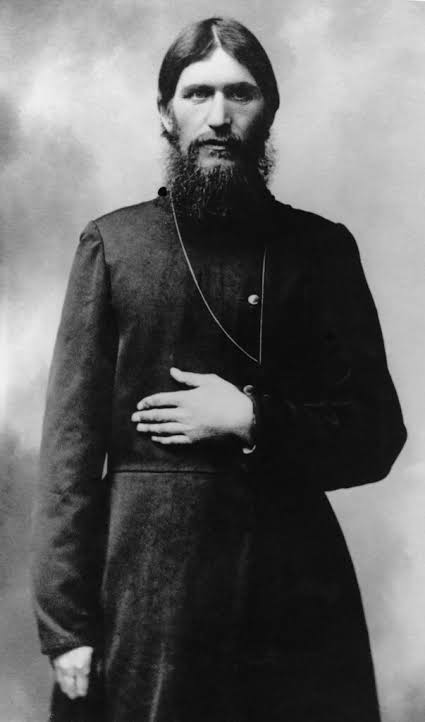 Grigori Yefimovich Rasputin (January 21, 1869 - December 30, 1916) was born on January 21, 1869, in the small Siberian village of Pokrovskoye, located
along the Tura River in the Tobolsk Governorate of the Russian Empire. He was born to a relatively prosperous peasant family, the son of Efim Vasilyevich
Rasputin, a farmer and village headman, and Anna Yegorovna Parshukova. Little is documented regarding his formal education, and he spent much of his
youth working the land, raising horses, and living a largely isolated life in the harsh Siberian wilderness.
Grigori Yefimovich Rasputin (January 21, 1869 - December 30, 1916) was born on January 21, 1869, in the small Siberian village of Pokrovskoye, located
along the Tura River in the Tobolsk Governorate of the Russian Empire. He was born to a relatively prosperous peasant family, the son of Efim Vasilyevich
Rasputin, a farmer and village headman, and Anna Yegorovna Parshukova. Little is documented regarding his formal education, and he spent much of his
youth working the land, raising horses, and living a largely isolated life in the harsh Siberian wilderness.
As a young man, Rasputin's life took a sharp turn following a personal spiritual crisis and a reported vision of the Virgin Mary. He left his
hometown, abandoning his wife, Praskovya Fyodorovna Dubrovina—with whom he had married in 1887 and had several children—to embark on a life as a
wandering ascetic and pilgrim. He spent time at various religious sites, including a stint at a monastery on Mount Athos in Greece. During his travels,
he developed a radical, unorthodox theological worldview. Influenced in part by underground, fringe Christian mystic groups like the Khlysty, Rasputin
came to believe that true spiritual purity could only be achieved through physical sin followed by intense repentance. He argued that by engaging in
temptation and debauchery, one could fully experience human weakness and subsequently humble oneself before God through remorse.
Rasputin arrived in St. Petersburg around 1903, where his magnetic charisma, intense, piercing eyes, and reputation as a holy man quickly drew the
attention of high-society religious circles and influential figures within the Russian Orthodox Church. His ascent to power within the imperial court was
cemented in 1905 when he was introduced to Tsar Nicholas II and Empress Alexandra. The royal couple was desperate for help regarding their only son,
Tsarevich Alexei, who suffered from severe, life-threatening hemophilia. Rasputin managed to soothe the young heir and alleviate his bleeding
episodes—largely through calming psychological presence and by advising against the administration of harsh Western medical treatments of the era, which
often did more harm than good.
Earning the absolute trust of the Empress, who viewed him as a genuine man of God and a savior sent to protect the Romanov dynasty, Rasputin soon
wielded immense informal political influence. During the volatile years leading up to and during World War I, his favor could make or break government
ministers, bishops, and military officials. This unprecedented power sparked intense outrage and conspiracy among the Russian aristocracy, military
elite, and conservative politicians, who viewed him as a dangerous charlatan destroying the reputation of the monarchy from the inside out.
Rumors, exaggerations, and political propaganda routinely weaponized Rasputin’s private life, depicting him as a depraved mystic engaged in massive
orgies and widespread sexual misconduct. While historians confirm he frequently exploited his position to engage in illicit relationships and predatory
behavior with vulnerable women, his life also intersects with the broader history of sexuality and LGBTQ history primarily through the circles in which
he moved and the identities of his eventual assassins.
In the late twilight of his life, Rasputin became increasingly enmeshed in the complex, high-society circles of St. Petersburg elites, which included
notable members of the aristocracy who practiced fluid or same-sex behaviors. Historians note that rumors and accounts from the era suggested Rasputin’s
approach to physical intimacy and spiritual communion transcended strict binary boundaries, with observations indicating he was just as comfortable
engaging with male associates within elite social networks as he was with female followers.
The most direct historical link between Rasputin and queer history centers around his primary assassin, Prince
Felix Yusupov. Yusupov, scion of one of the wealthiest families in the Russian Empire, was notably bisexual and
well-documented in his memoirs for moving within queer aristocratic circles, participating in cross-dressing performances in his youth, and maintaining
romantic and intense platonic attachments to men. According to historical analyses of the murder plot, some accounts suggest that Yusupov’s hatred for
Rasputin—and the complex psychological dynamic between them—was further complicated by the aristocratic subcultures of the era. Rumors persisted that
Yusupov had initially approached Rasputin hoping for a cure for his same-sex desires, or conversely, that Rasputin had rejected or reciprocated romantic
advances before political motives took over.
On the night of December 30, 1916 (December 17 under the old Russian calendar), Prince Yusupov, along with Grand Duke
Dmitri Pavlovich and other co-conspirators, lured Rasputin to the Moika Palace. Believing
they could neutralize him quietly, they fed him cyanide-laced cakes and wine. When the poison mysteriously failed to act quickly, a panicked Yusupov shot
him. Believing him dead, the conspirators left him, but Rasputin miraculously revived and attempted to escape into the courtyard, where he was shot
again, beaten, and finally dumped into the freezing waters of the Neva River. His body was recovered days later, and an autopsy confirmed he drowned.
Rasputin's assassination did not save the Romanov dynasty as his killers hoped; instead, it alienated the imperial couple further from the public and
elite, paving the way for the Russian Revolutions of 1917 and the ultimate collapse of the empire.
A memorial cross marks the site of Grigori Rasputin's original burial in Tsarskoye Selo (Pushkin), Saint Petersburg, Russia—specifically on the edge
of the Alexander Park near the former site of the unfinished St. Seraphim Church.
Following his murder in December 1916, Rasputin was secretly buried here with the assistance of Empress Alexandra and Anna Vyrubova. However, shortly
after the February Revolution in March 1917, a detachment of soldiers discovered the grave, exhumed the body, and burned it in the nearby woods. The
plaque on the wooden memorial replicates the historical inscription left by the soldiers at the time of the cremation: "Тут сожжён труп Распутина
Григория... в ночь на 11 декабря 1916 года" (note: historical accounts date the exhumation and burning to March 1917).
References:
- Gayday by Massimo Consoli, 2005
- Smith, Douglas. Rasputin: Faith, Power, and the Twilight of the Romanovs (Farrar, Straus and Giroux, 2016).
- De Jonge, Alex. The Life and Times of Grigorii Rasputin (Coward, McCann & Geoghegan, 1982).
- Figes, Orlando. A People's Tragedy: The Russian Revolution 1891–1924 (Viking, 1996).
- Yusupov, Prince Felix. Lost Splendour (translated from French by Ann Green; Jonathan Cape, 1953).
- Paléologue, Maurice. An Ambassador's Memoirs (George H. Doran Company, 1925).
- Grand Duke Nikolai Mikhailovich. Diaries and Secret Notes (held in Russian state archives and cited extensively in modern historiography, such as by Douglas Smith).
Support this project
This website is a passion project researched, developed, and funded entirely by me. If you find the content valuable and would like to help support the ongoing research and hosting costs, any contribution is deeply appreciated.
Thank you for keeping this independent resource alive!
My books on Amazon: Elisa Rolle's books
BACK TO HOME PAGE